Showing posts with label tempera. Show all posts
Showing posts with label tempera. Show all posts
Wednesday, November 6, 2019


Friday, January 18, 2019


Monday, December 4, 2017
Colors & Moods Inspired by Mark Rothko
Abstract art by mark rothko for kids from nivaca2
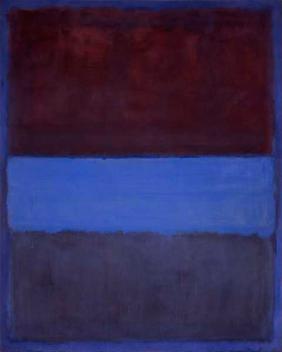
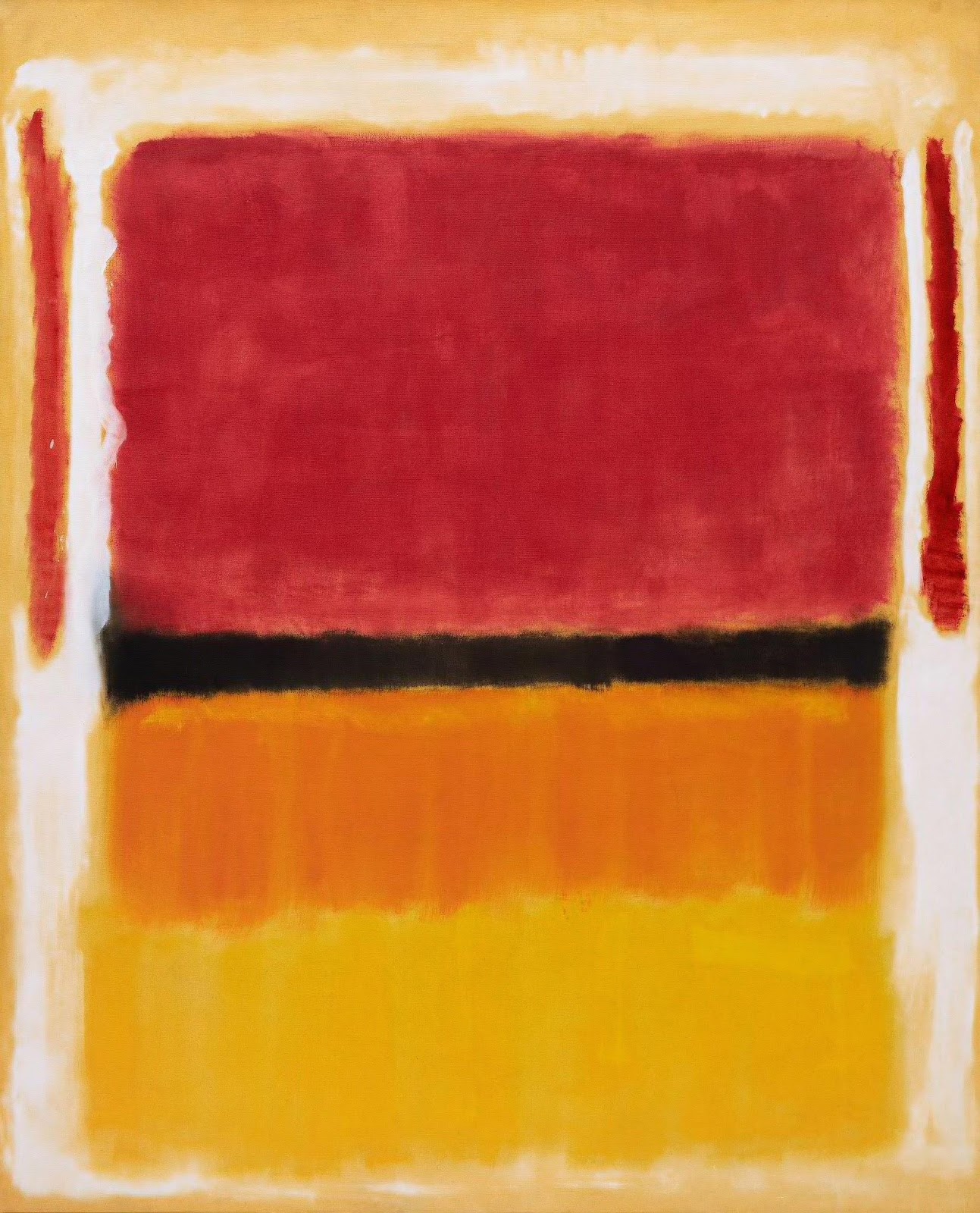
First and second graders learned about Mark Rothko, an abstract expressionist painter. We compared Rothko's "color field" paintings with the landscapes by Wolf Kahn, which we had just studied a couple of weeks ago. Like Kahn, Rothko uses color to capture a feeling or mood of a landscape, rather than focusing on the details of an image.
First and second grade artists created artwork inspired by Mark Rothko. First we used chalk pastel on black paper, with a focus on blending unique colors and capturing a mood. Then we painted many different sizes of cardboard rectangles, which we assembled into colorful collages. Students named their compositions based on the mood that they had captured.

First and second graders learned about Mark Rothko, an abstract expressionist painter. We compared Rothko's "color field" paintings with the landscapes by Wolf Kahn, which we had just studied a couple of weeks ago. Like Kahn, Rothko uses color to capture a feeling or mood of a landscape, rather than focusing on the details of an image.
First and second grade artists created artwork inspired by Mark Rothko. First we used chalk pastel on black paper, with a focus on blending unique colors and capturing a mood. Then we painted many different sizes of cardboard rectangles, which we assembled into colorful collages. Students named their compositions based on the mood that they had captured.
Friday, November 17, 2017


Tuesday, June 6, 2017



Friday, June 2, 2017
Color wheels, Paint strips and Color Matching
Third and fourth graders learned all about the Color Wheel, color mixing and color matching. They had three challenges to complete as part of this unit:
1. Paint all 12 colors of the color wheel and create your own color wheel
2. Find a photo in a magazine and match several of the colors in the image (inspired by this very cool website, Design Seeds)
3. Create a paint strip with different tints or shades of the same color and name each of the hues


Monday, January 30, 2017
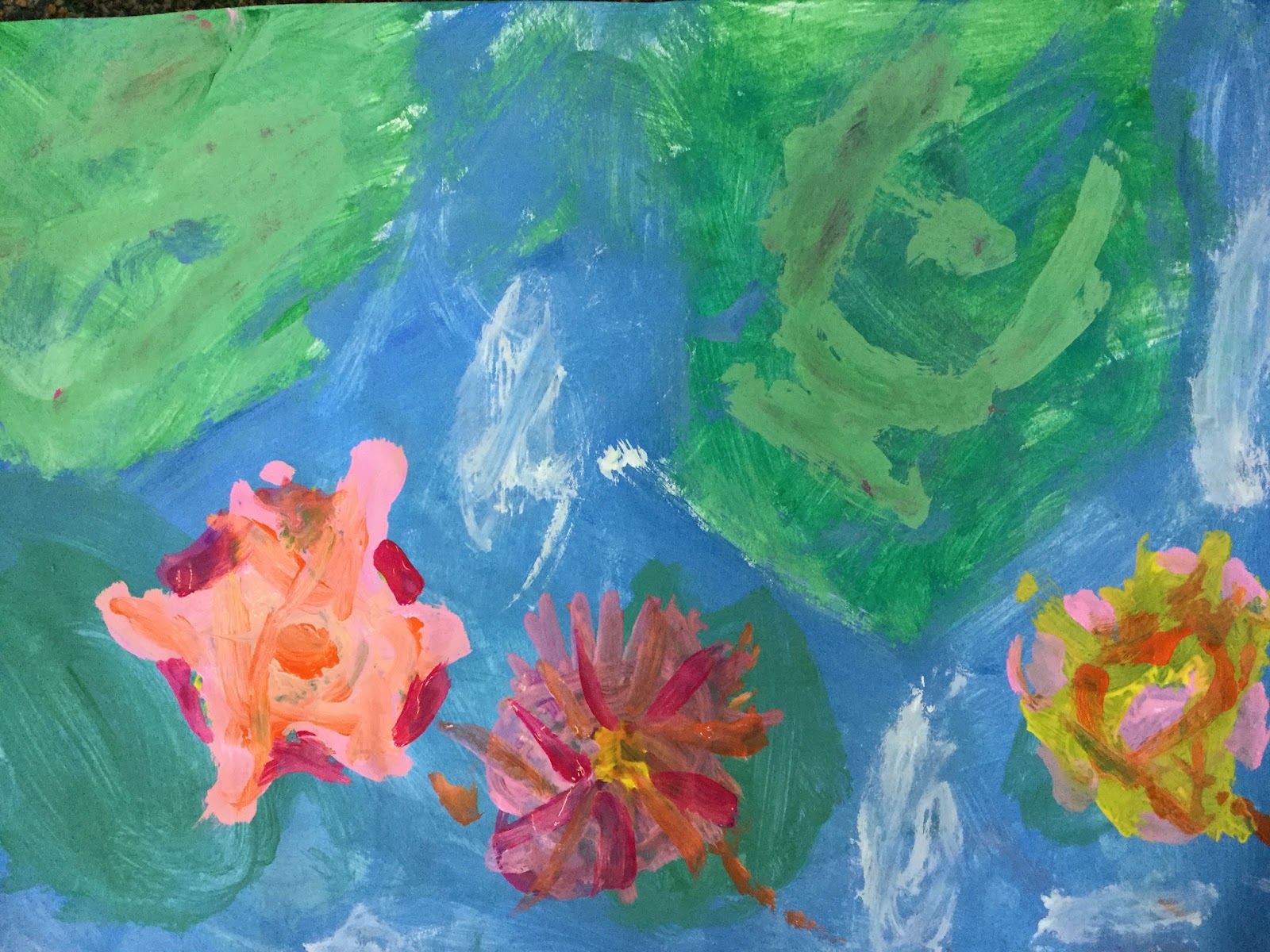
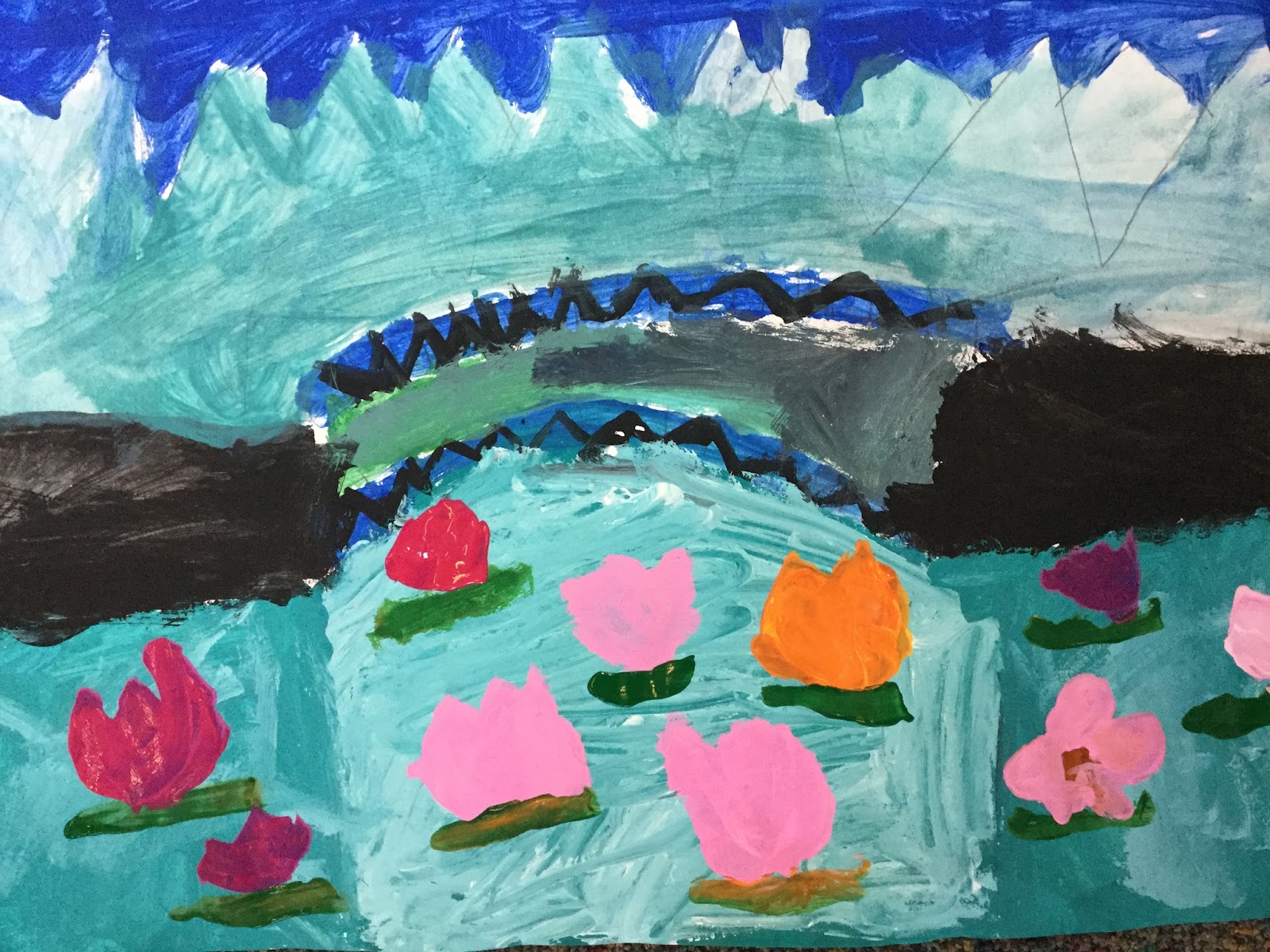
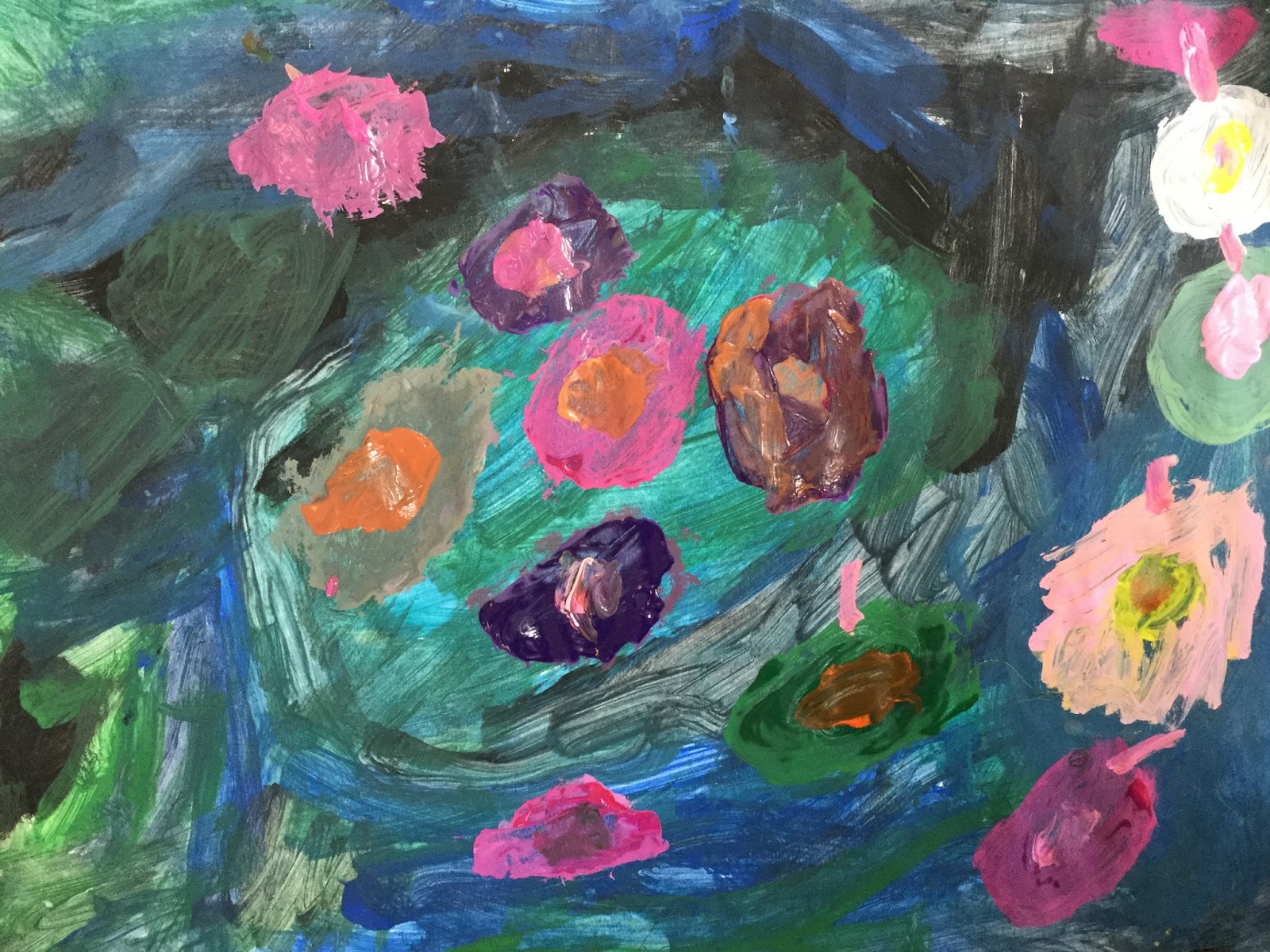
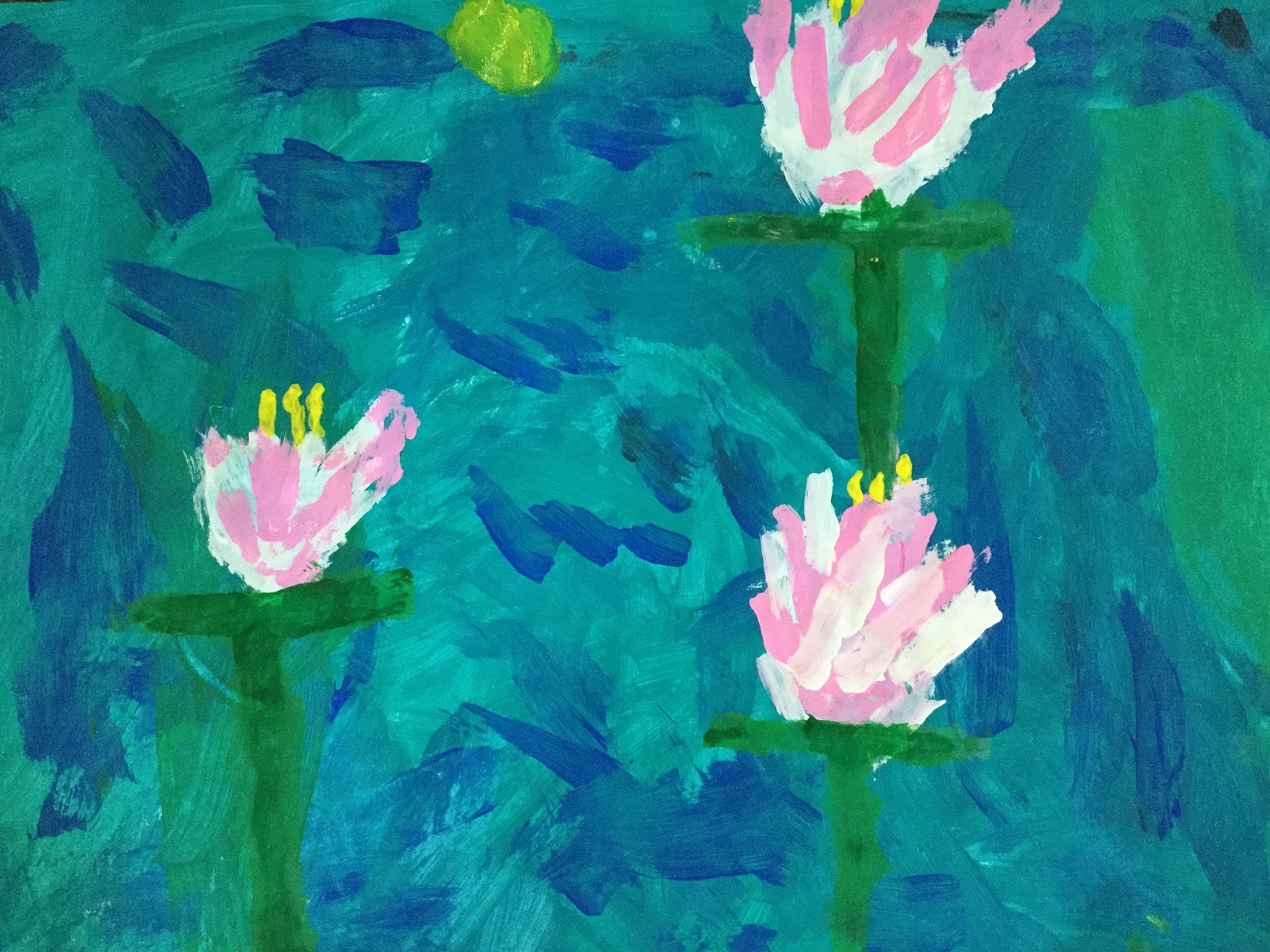
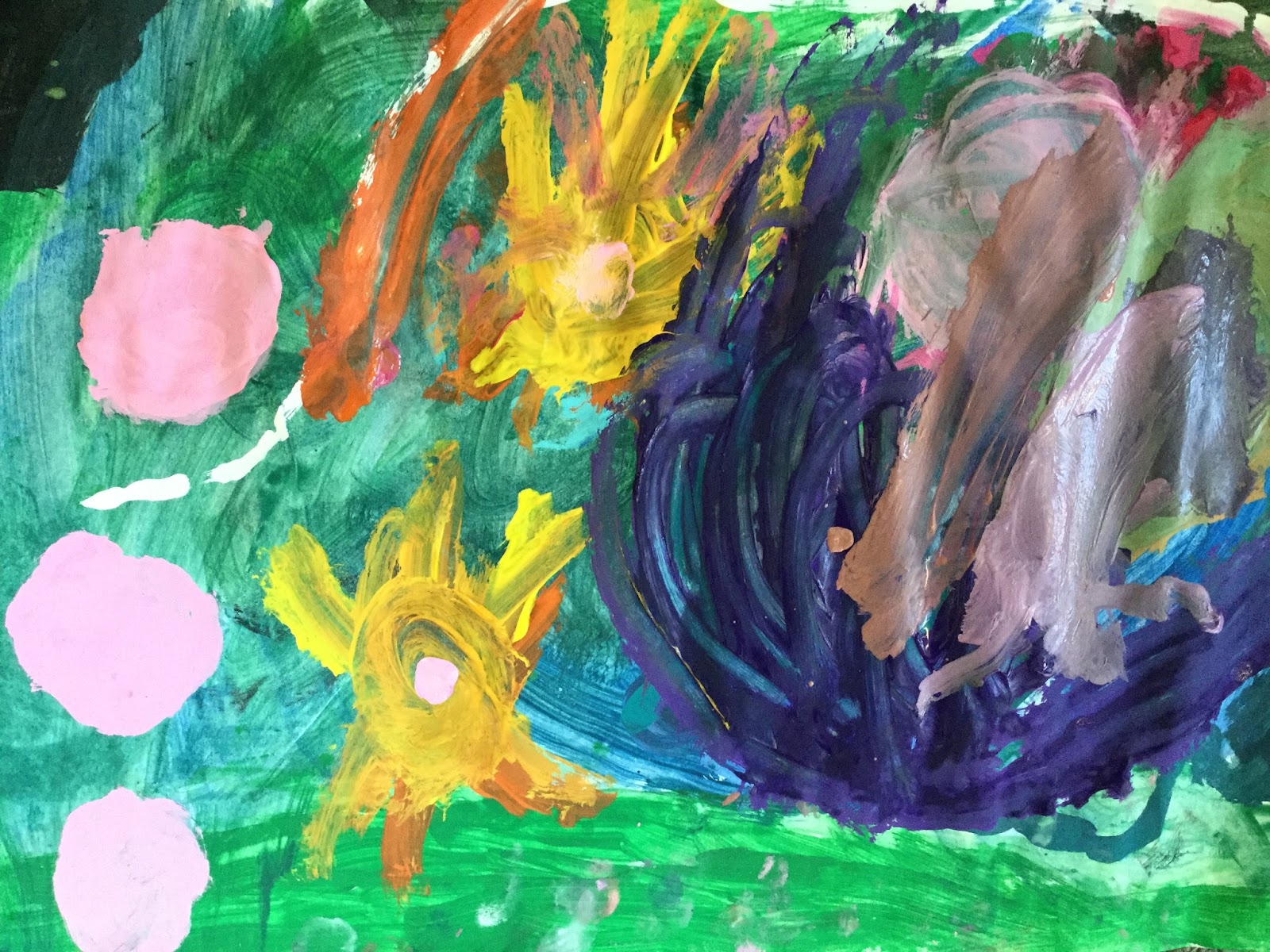
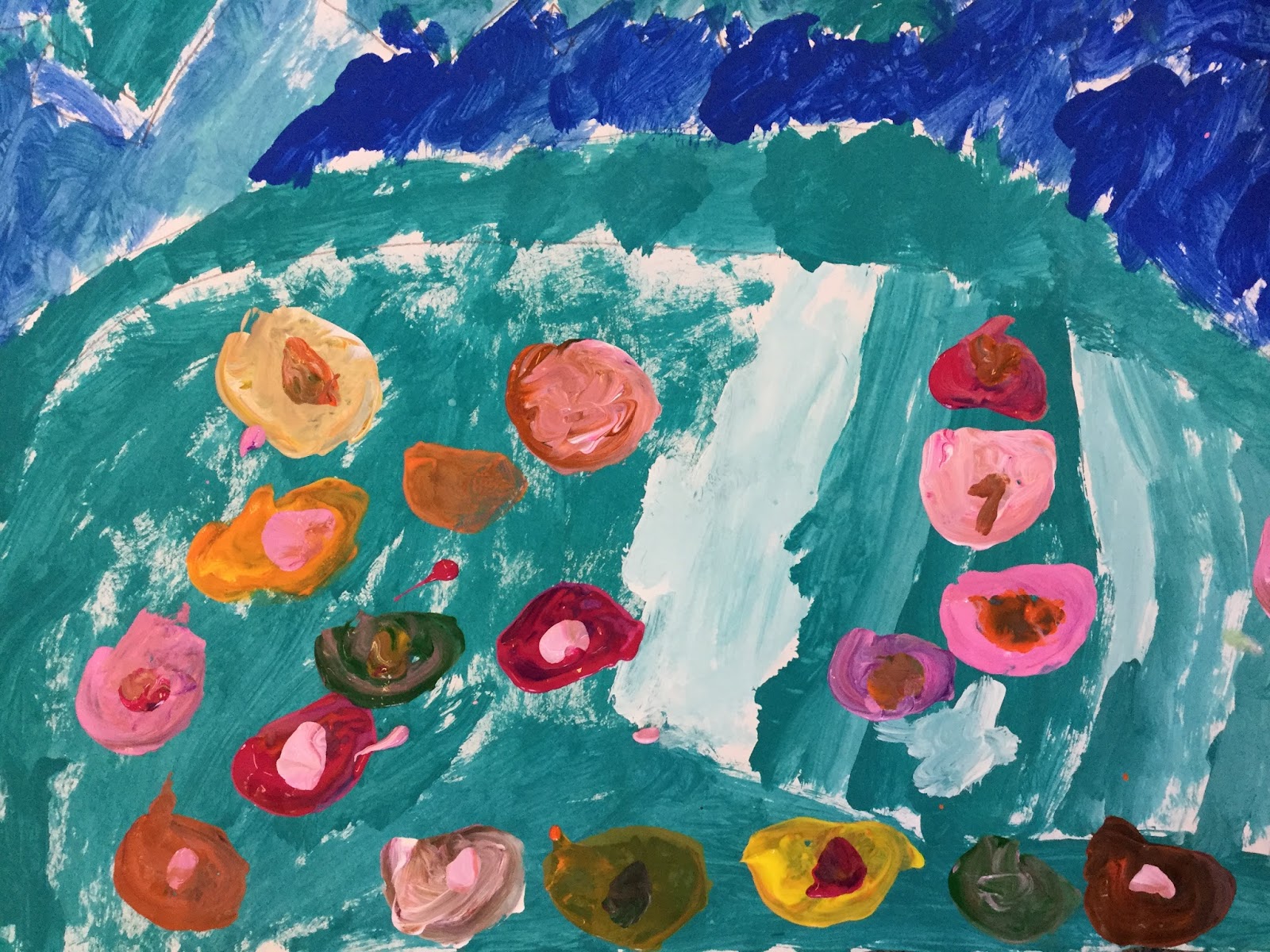
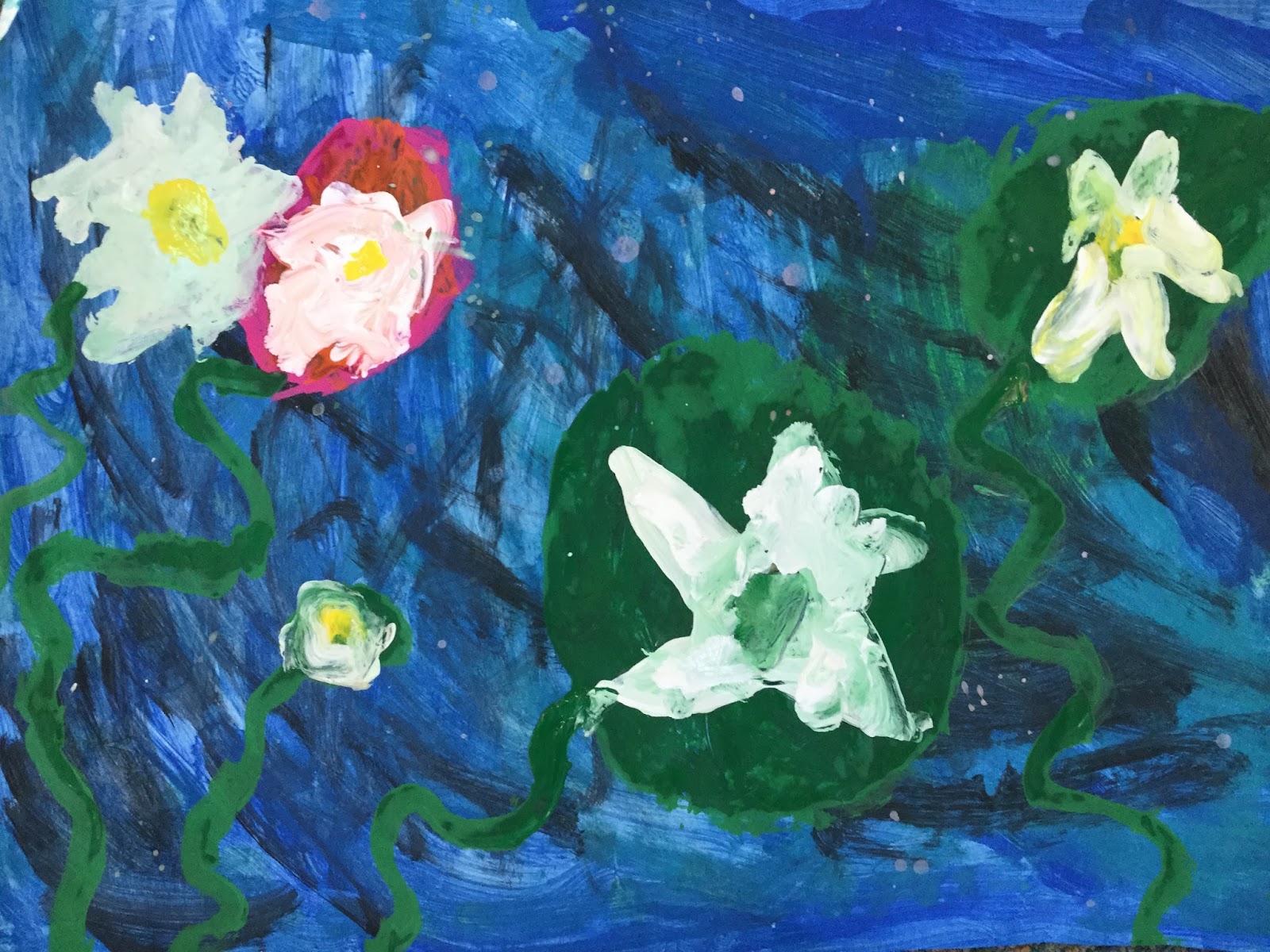
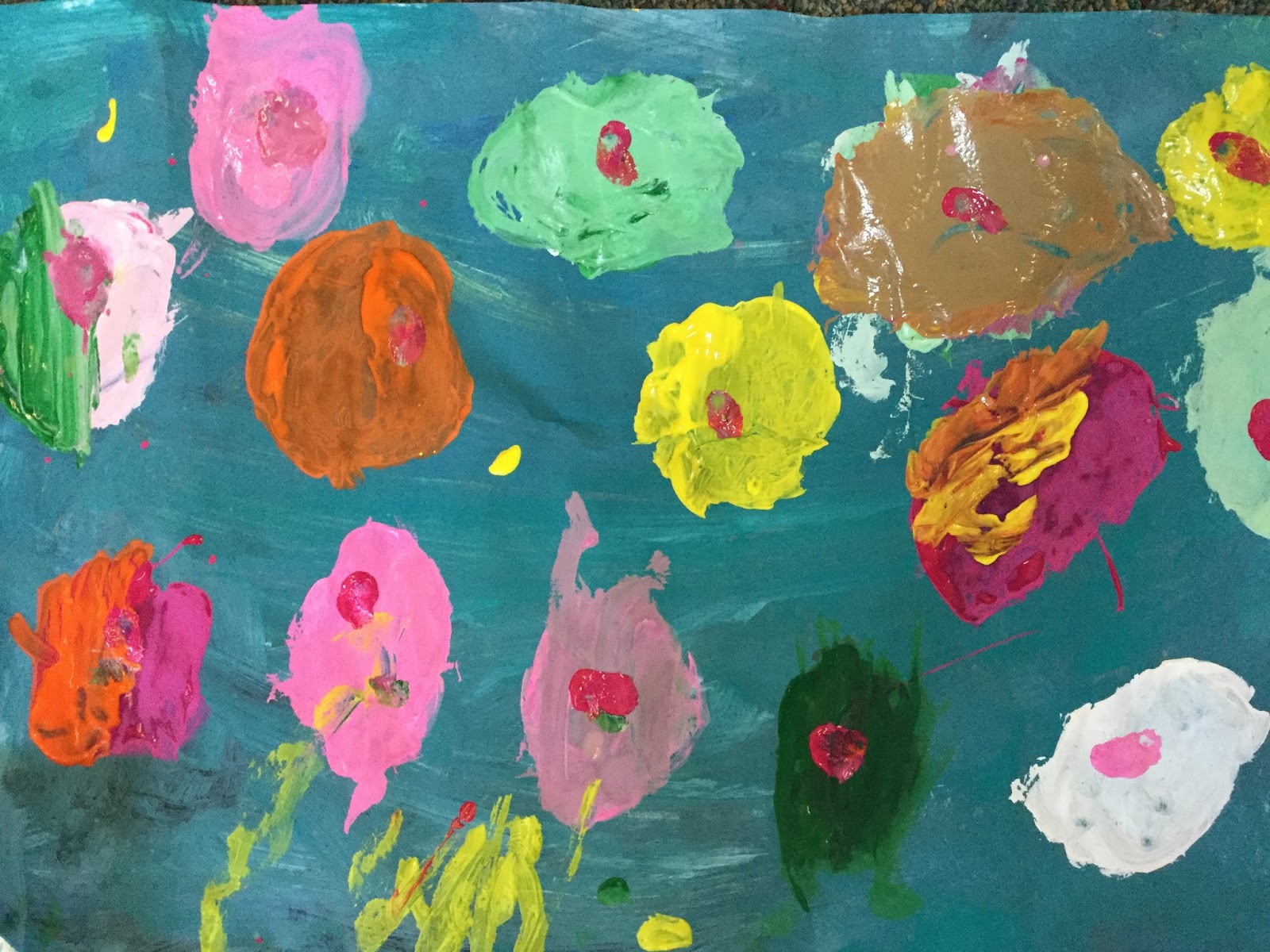
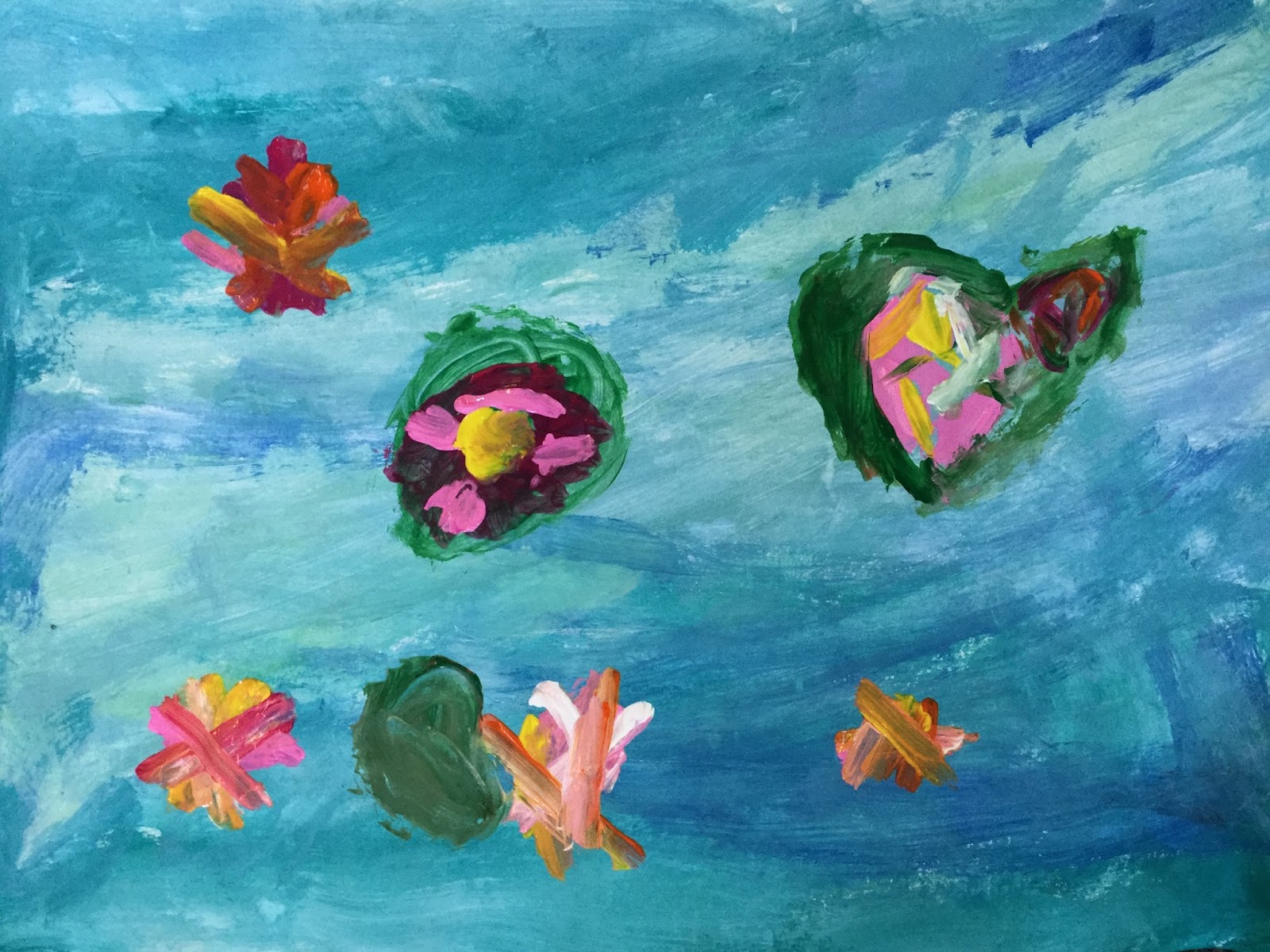
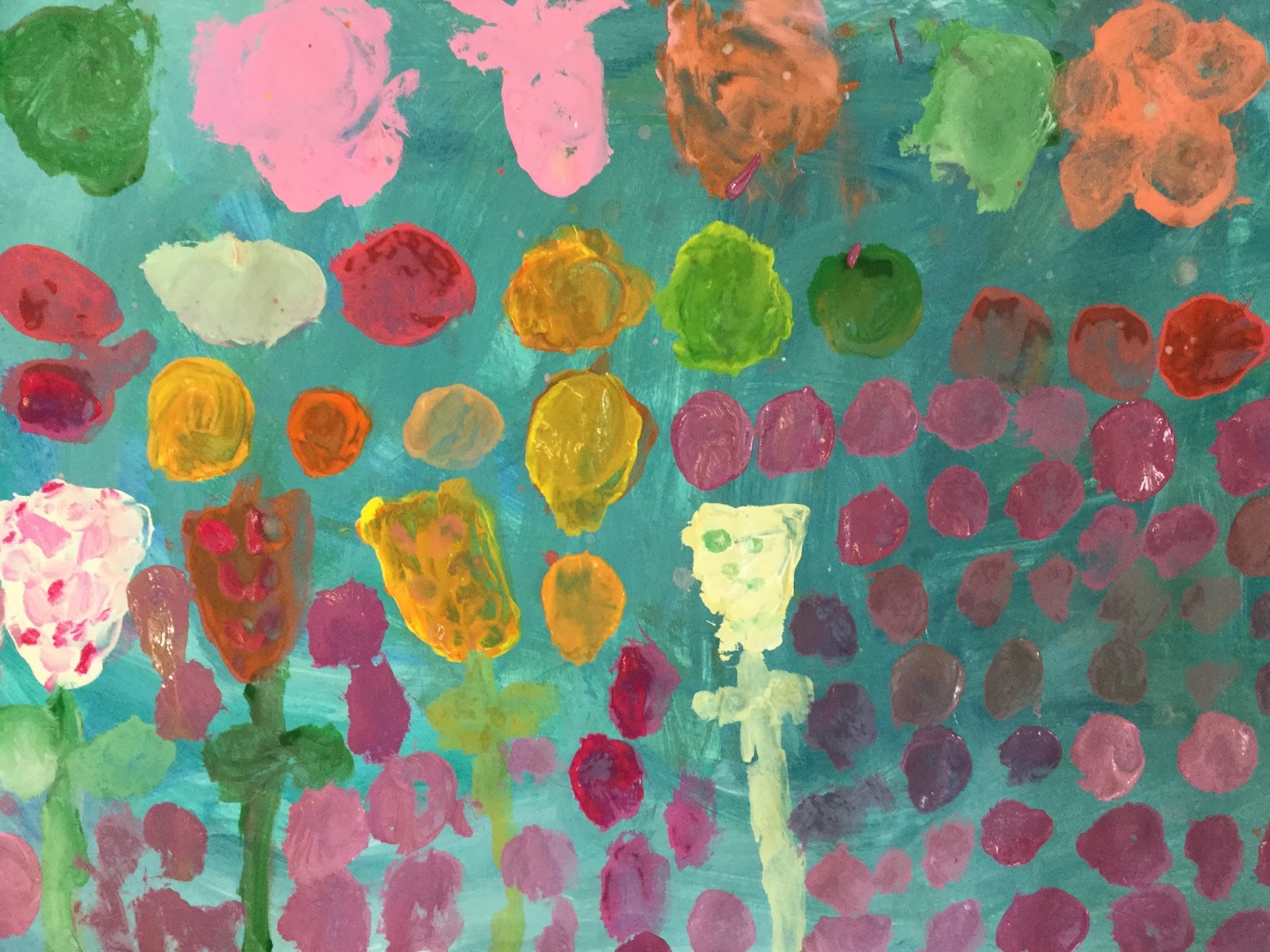
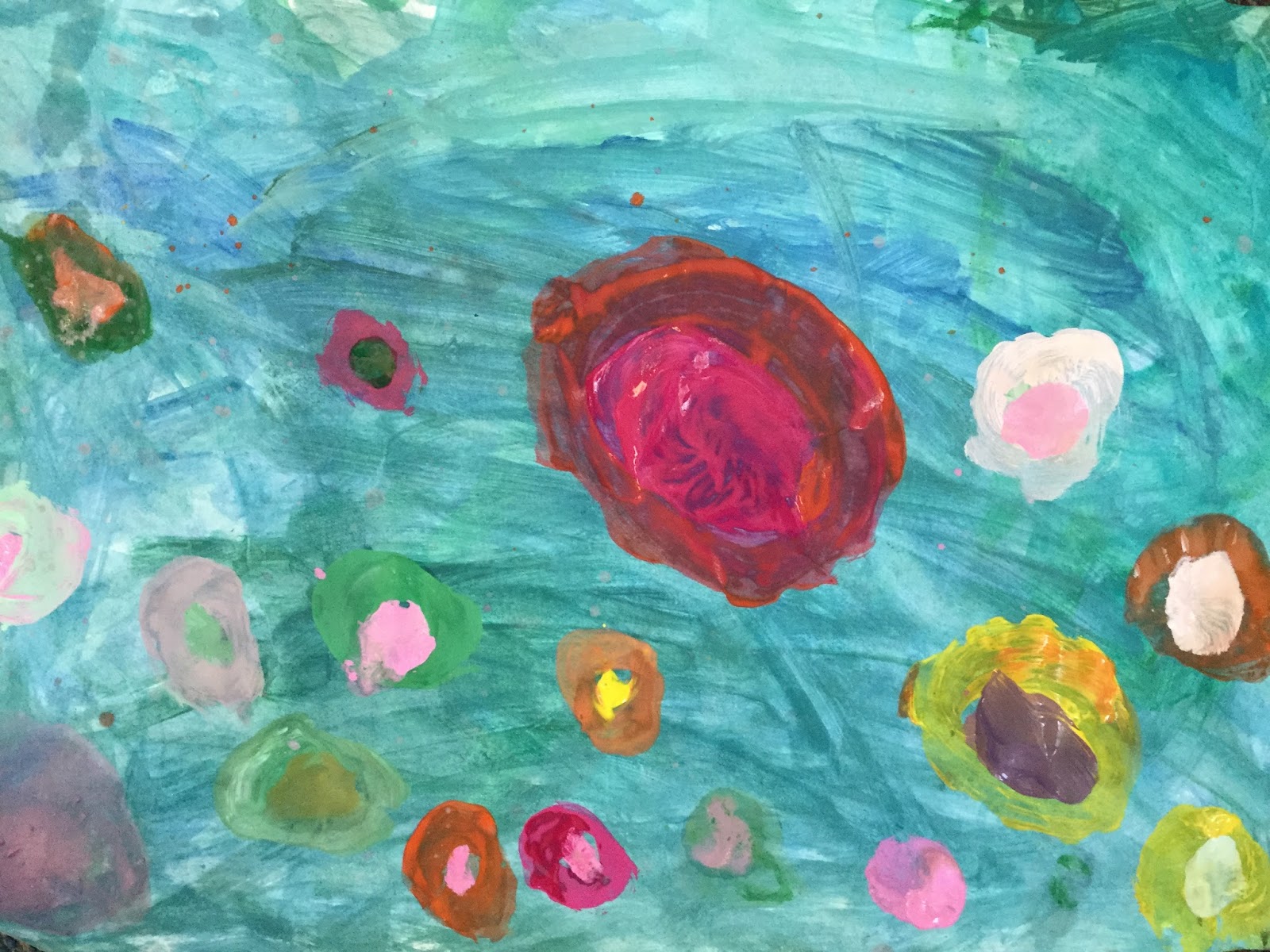
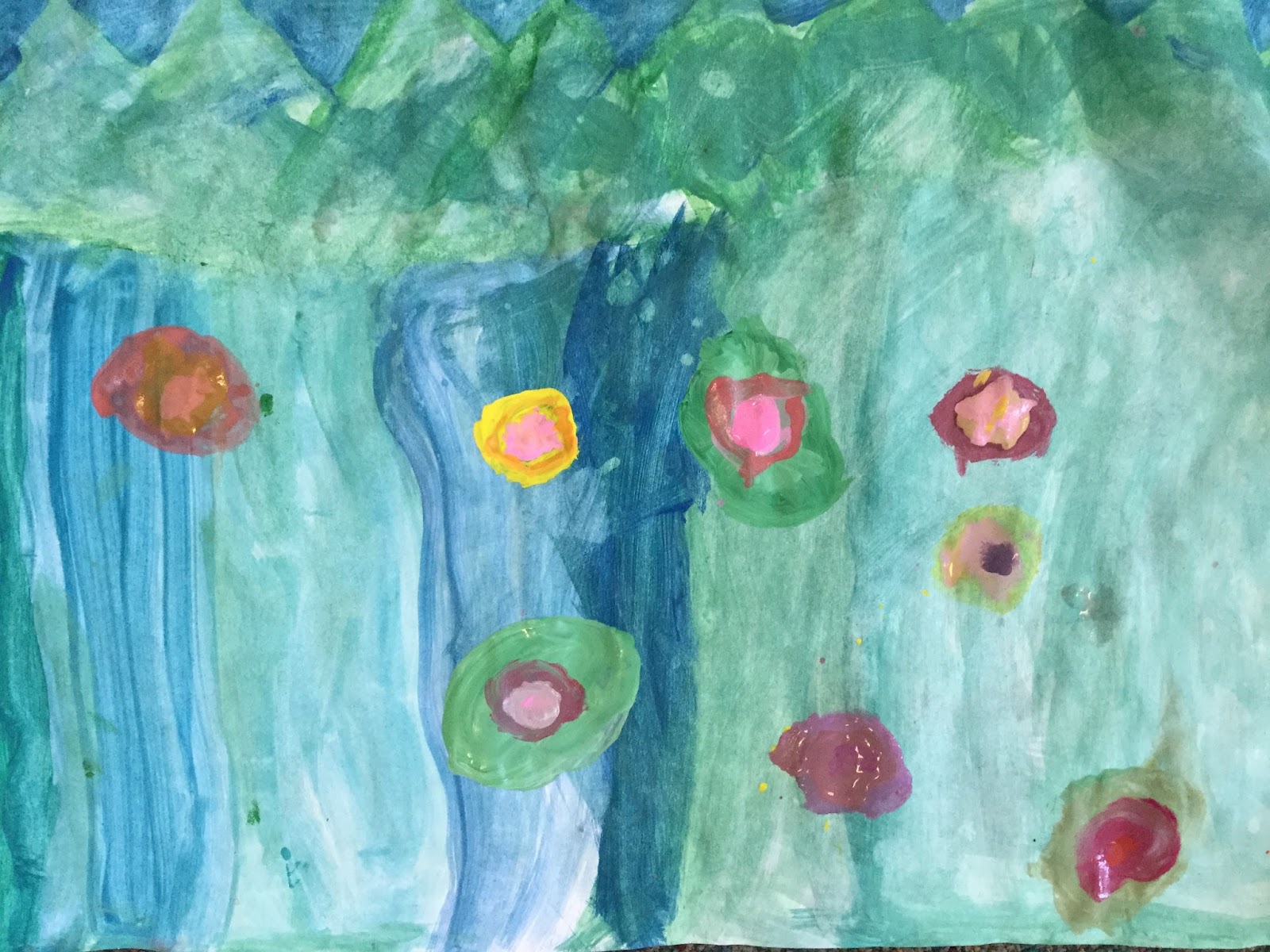
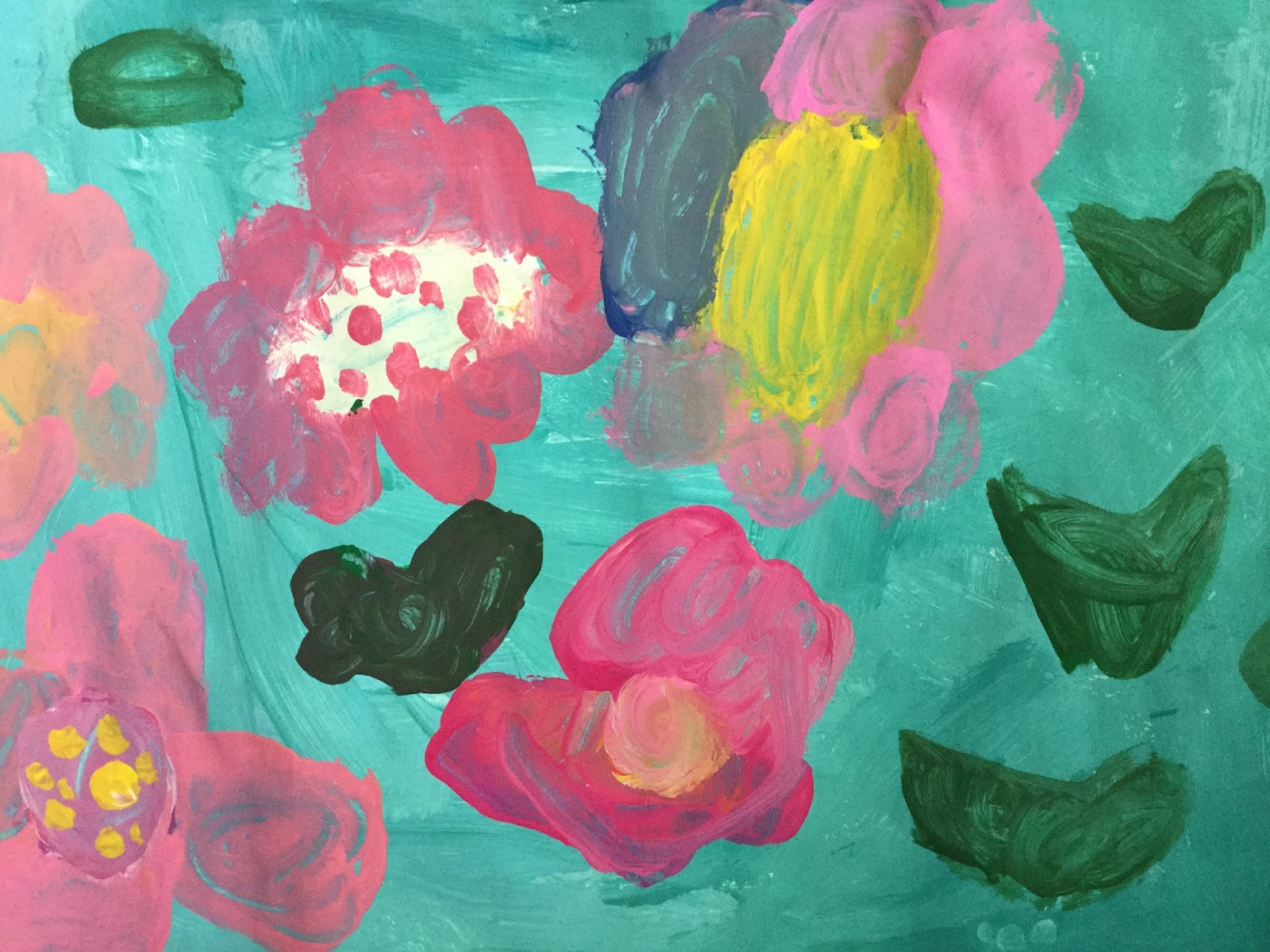
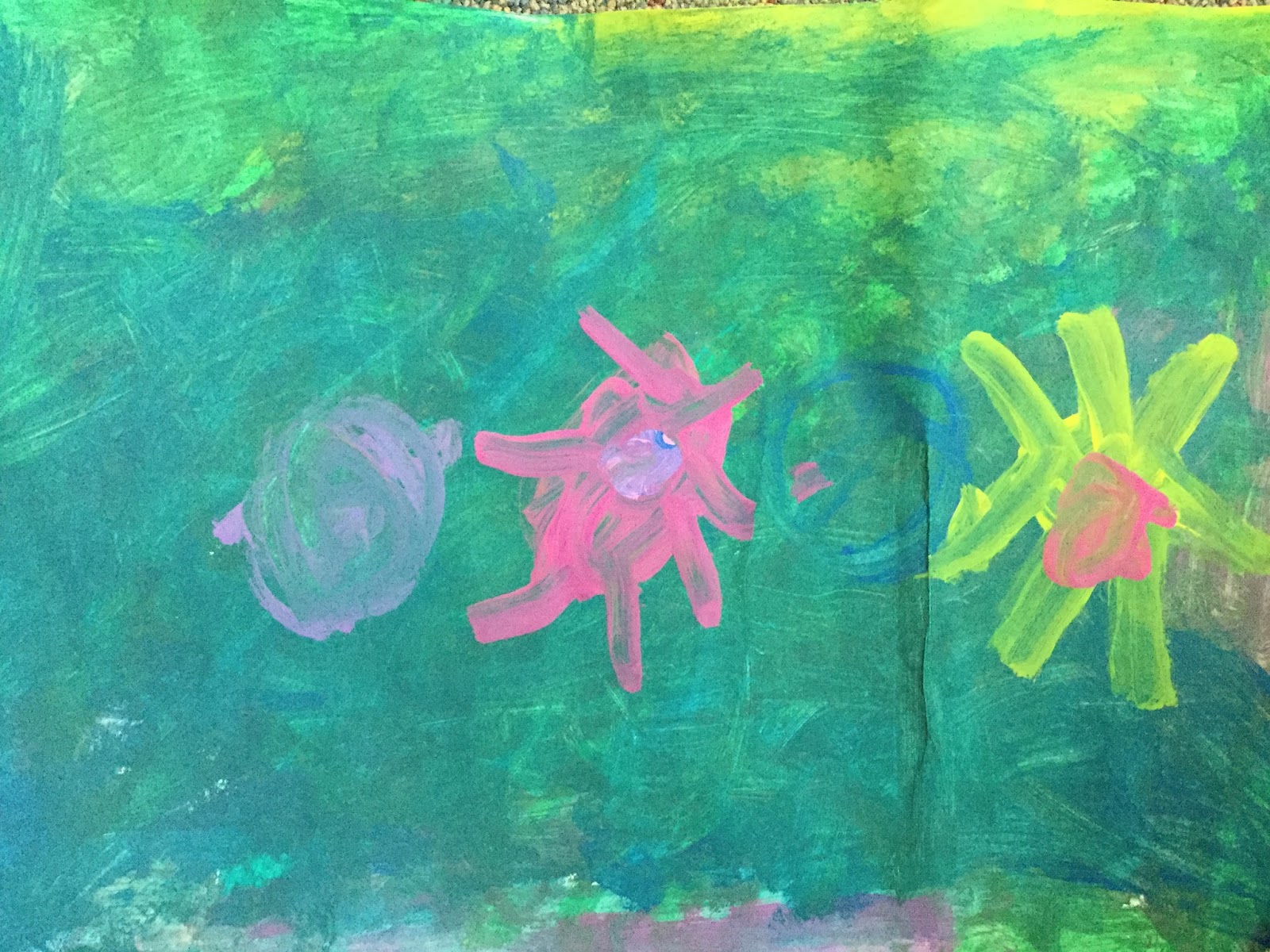
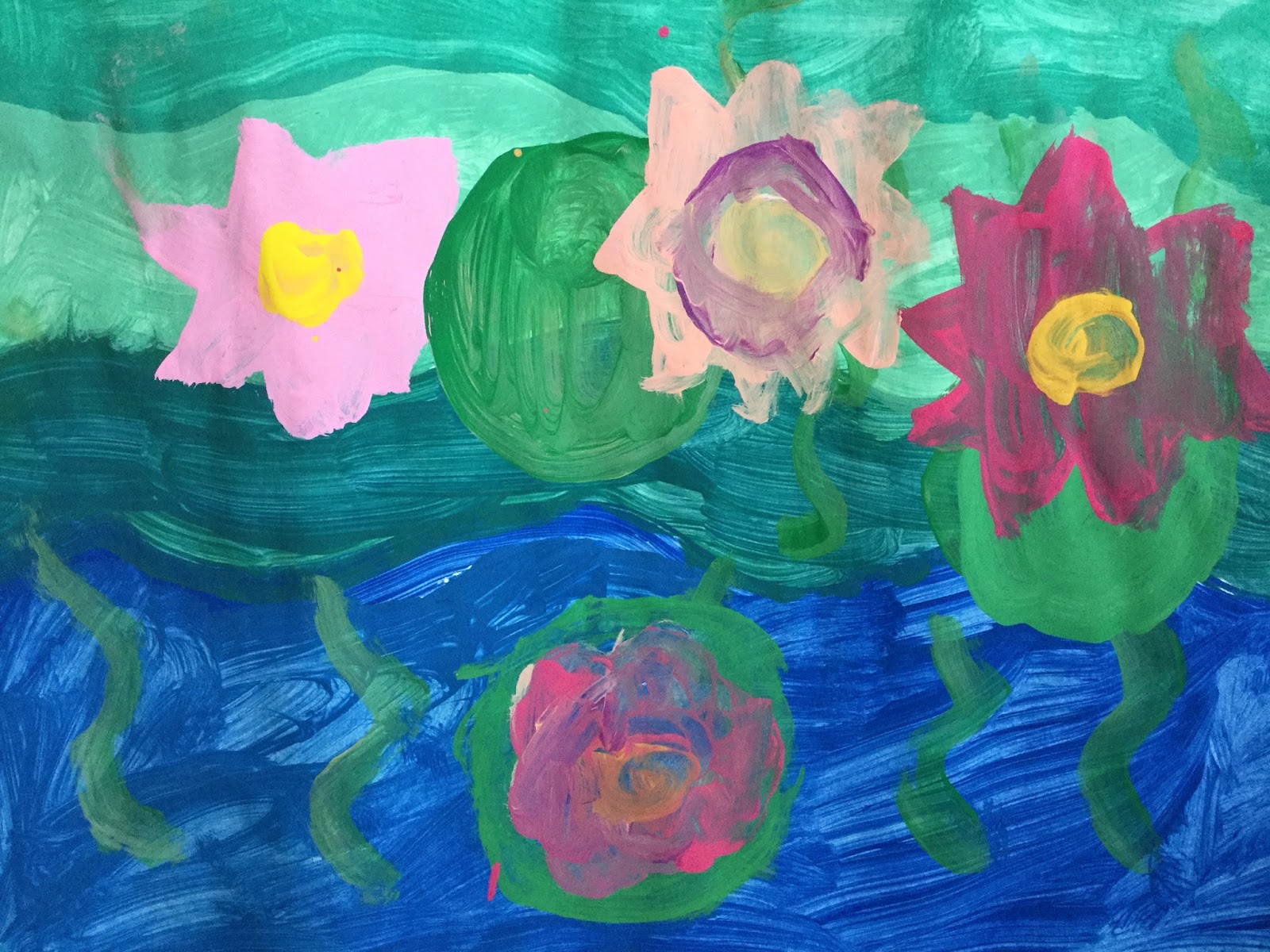
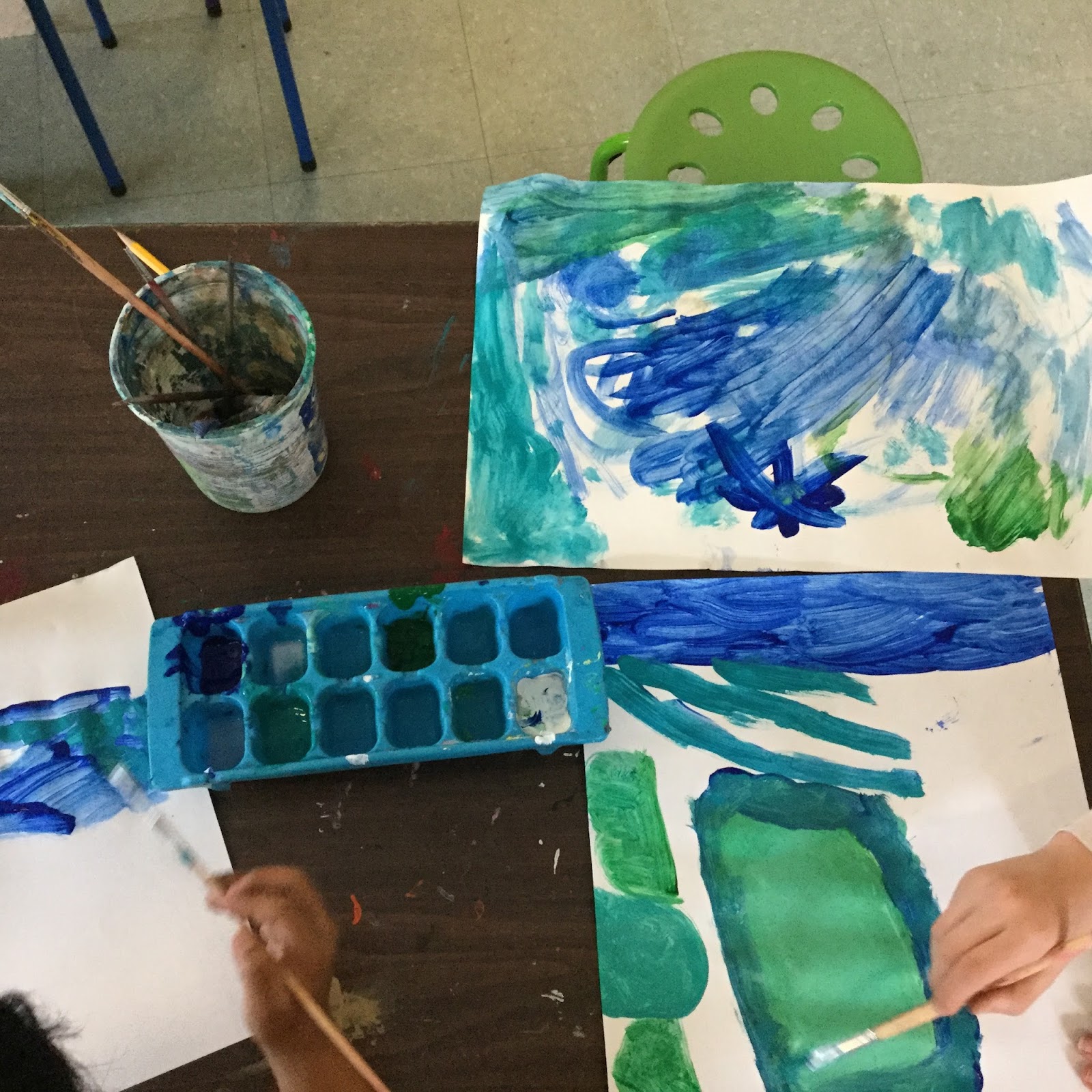
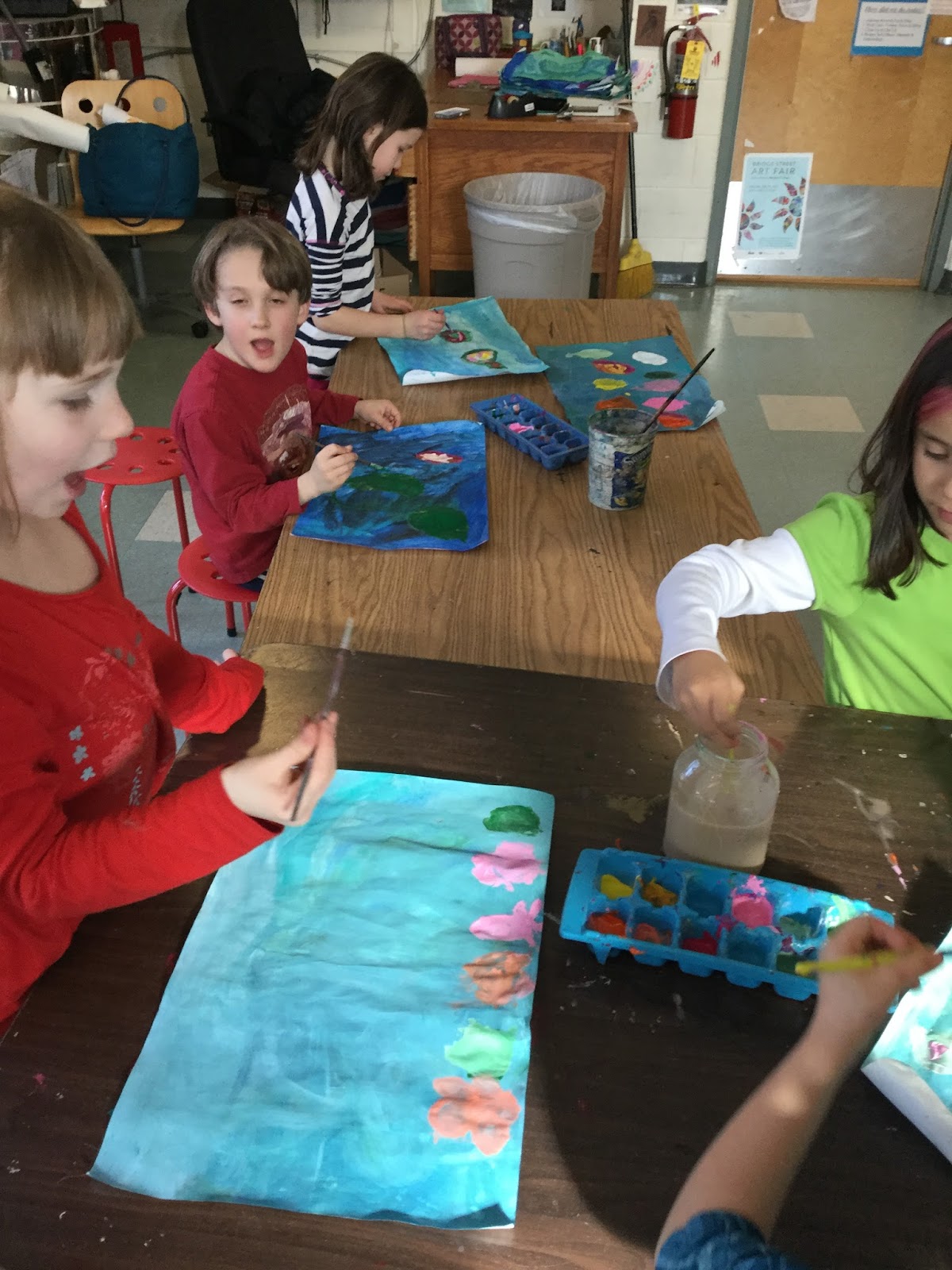
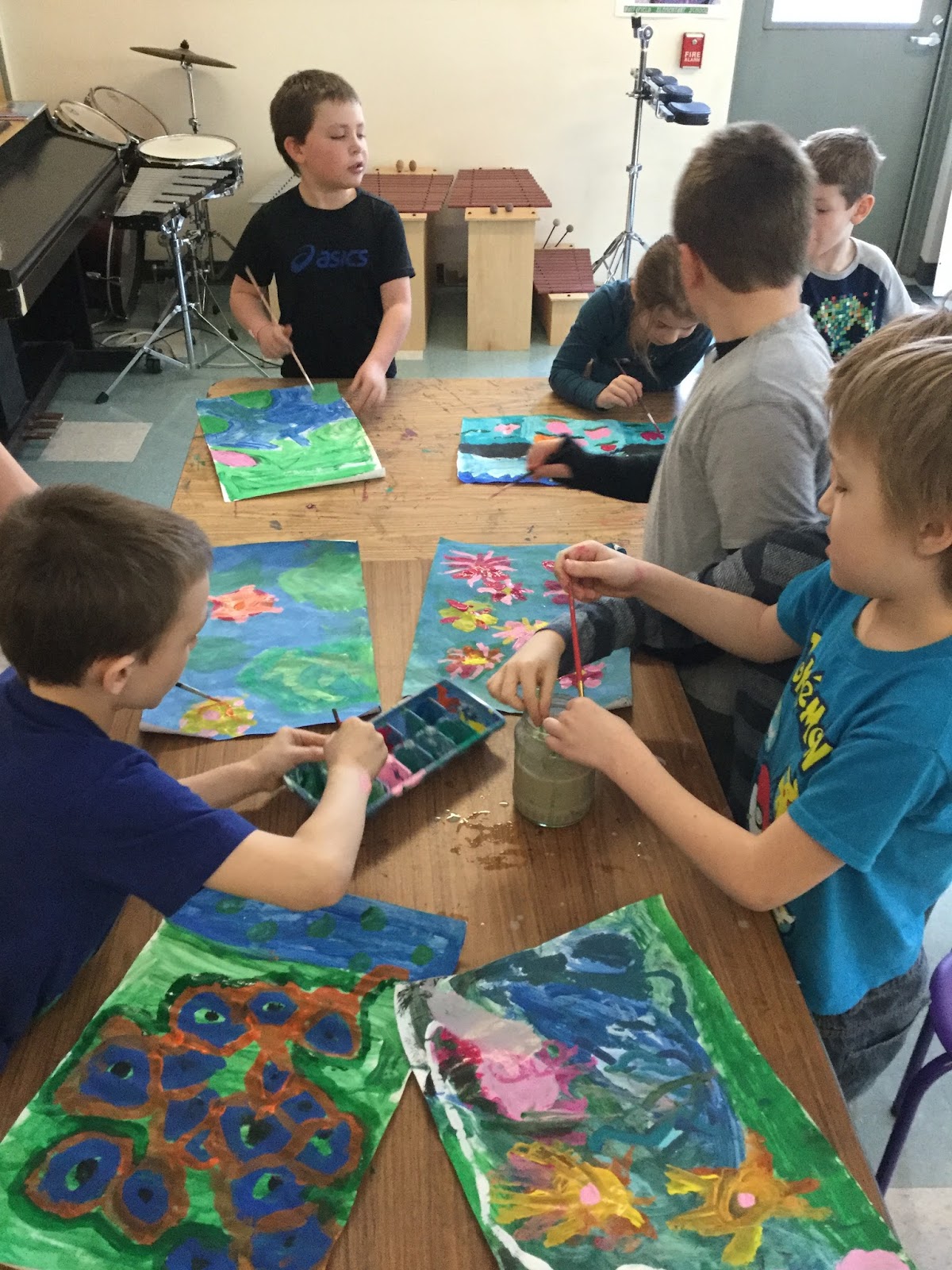
Inspired by Monet's Waterlilies

What color is water?
First and second grade artist learned about Impressionist painter Claude Monet. We talked about how Monet broke from the art traditions of the time by painting outside in nature and trying to capture the beauty of sunlight at different times of day. We looked at examples of his many waterlily paintings.
Google Arts & Culture has some very cool tools for getting up close and personal with famous works of art.
You can take a virtual tour of Monet's waterlily paintings at the Musee de l'Orangerie in Paris using Google Art Project.
Click here to check it out!
You can use the ZOOM tool to get close enough to one of Monet's Water Lily paintings that you can see each impressionist brushstroke.
Click here to check it out!

Tuesday, December 6, 2016
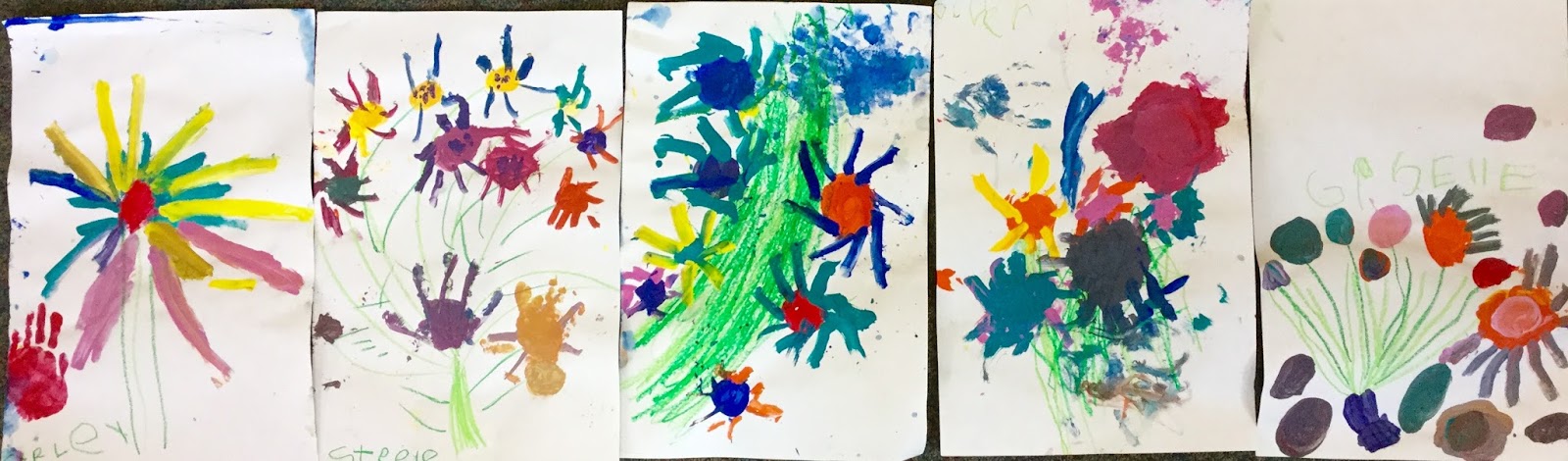
Inspired by Picasso's "Bouquet of Peace"
Picasso's print is variously titled "Bouquet of Peace,"
"Hands with Flowers," "Hands with Bouquet," "Flowers and Hands," or any
other variation on those words. Originally a watercolor drawing, Picasso
subsequently printed the picture as a color lithograph. He created it
for a peace demonstration in Stockholm, Sweden in 1958.

"Bouquet of Peace" shows his desire for people to join together in love and harmony. The brightly colored flowers convey a sense of hope and rebirth, and the bouquet forms a bond between two individuals symbolized by the two hands displayed within the piece. The simplicity of the forms not only represents Picasso's desire for childlike innocence in his art, but also symbolizes the purity and openness needed to get along with others in peace. (Read more at http://artprep.weebly.com/picasso-bouquet-of-peace.html)
Kindergarten artists looked at Picasso's famous painting noticed that the two hands belong to different people. This means that the flowers are being passed from one person to another.
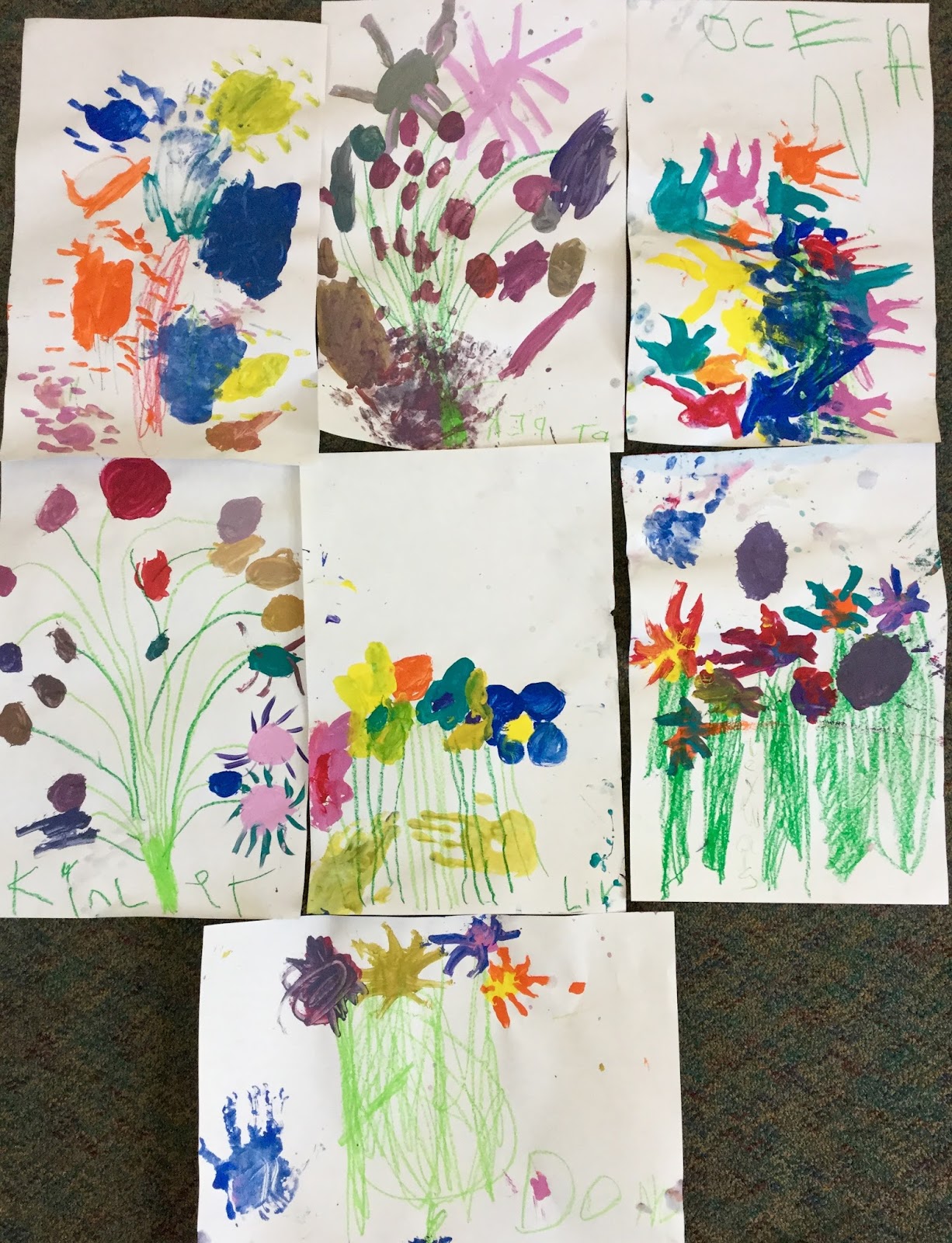
"Bouquet of Peace" shows his desire for people to join together in love and harmony. The brightly colored flowers convey a sense of hope and rebirth, and the bouquet forms a bond between two individuals symbolized by the two hands displayed within the piece. The simplicity of the forms not only represents Picasso's desire for childlike innocence in his art, but also symbolizes the purity and openness needed to get along with others in peace. (Read more at http://artprep.weebly.com/picasso-bouquet-of-peace.html)
Kindergarten artists looked at Picasso's famous painting noticed that the two hands belong to different people. This means that the flowers are being passed from one person to another.
Subscribe to:
Comments (Atom)